☁️ Project 01: Identity Lifecycle & Governance Automation
Secure Identity Provisioning, Access Control, and Policy-Driven Governance




📌 Overview
This project demonstrates the implementation of automated identity lifecycle management and governance controls within Microsoft Entra ID and Azure.
The solution transitions from manual administration to controlled, repeatable identity provisioning and policy-driven governance, ensuring that access is consistent, auditable, and aligned to least privilege principles.
The objective is to reduce identity-related risk while enabling scalable and secure access management.
🔐 IAM Context
In enterprise environments, identity is the primary security boundary.
This project focuses on ensuring that:
- Identities are provisioned in a controlled and standardised manner
- Access is assigned through group-based RBAC models, not direct user permissions
- Governance controls prevent misuse of access at the infrastructure layer
🧠 Design Rationale
The architecture is built around three core principles:
- Standardisation: All identities are created within predefined security groups
- Access Control: Permissions are inherited via RBAC-aligned group membership
- Governance Enforcement: Policy controls restrict what authorised users can deploy
This approach moves from ad-hoc identity management to a structured IAM model combining identity, access, and governance.
🛠️ Technical Stack
| Category | Tools Used | IAM / Security Relevance |
|---|---|---|
| Identity | Microsoft Entra ID | Centralised identity and access control |
| Access Control | RBAC | Role-based permission enforcement |
| Automation | Azure PowerShell (Az Module) | Repeatable identity provisioning |
| Governance | Azure Policy (JSON) | Enforcement of organisational controls |
📌 Implementation
1. Identity Lifecycle Automation
Manual user provisioning introduces risk through inconsistent permissions and unmanaged identities.
To address this, I developed create-identities.ps1 to automate onboarding.
Key Features
- Programmatic user creation
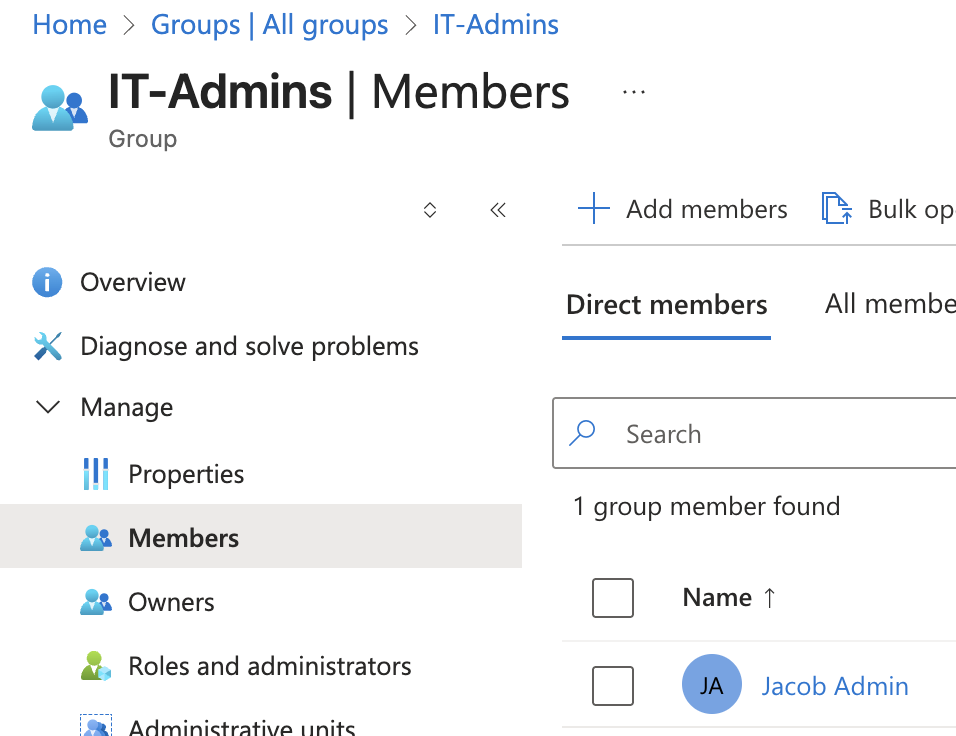
- Automatic group assignment (
IT-Admins) - Immediate RBAC alignment

Automated provisioning ensures consistent identity creation within controlled access structures.
2. Access Control Model (RBAC)
Access is not assigned directly to users.
Instead, users inherit permissions through group membership.
IAM Design Decisions
- Prevents privilege creep
- Simplifies access management at scale
- Supports least privilege enforcement

CLI validation ensures identity objects and group assignments are accurate and auditable.
3. Identity Validation & Synchronisation
Provisioned identities were validated using CLI and portal checks to ensure:
- Correct group membership
- Accurate mapping of user principal names
- Consistency across Entra ID
⚖️ Phase 2: Governance & Control Enforcement
To prevent misuse of access privileges, I implemented policy-driven governance controls.
Policy-as-Code Implementation
A custom JSON policy was developed to restrict Virtual Machine deployments to cost-optimised SKUs.
- Script:
deploy-governance.ps1 - Policy:
Enforce-Cost-Optimised-VM-Sizes.json

Control Enforcement
Attempts to deploy non-compliant resources are blocked at the Azure Resource Manager (ARM) layer.


IAM Relevance
- Prevents authorised users from deploying unauthorised resources
- Enforces organisational policy regardless of permissions
- Adds a control layer beyond RBAC
⚖️ Design Considerations & Trade-offs
- Automation improves consistency but requires script maintenance
- Group-based access improves scalability but requires governance discipline
- Policy enforcement improves security but can restrict operational flexibility
🎯 Outcome
This project demonstrates a structured approach to IAM, combining:
- Automated identity lifecycle management
- Group-based access control (RBAC)
- Policy-driven governance enforcement
- Scalable and auditable identity operations
🧠 Key IAM Outcomes
- Consistent Identity Provisioning: Eliminates manual errors and unmanaged identities
- Access Governance: Ensures permissions are assigned through controlled structures
- Policy Enforcement: Prevents misuse of access privileges
- Operational Scalability: Enables repeatable, auditable identity processes
🔮 Future Enhancements
- Integration with CI/CD pipelines for governance deployment (GitOps model)
- Implementation of Privileged Identity Management (PIM)
- Conditional Access policy design and enforcement
Maintained by Jacob Adedoyin