📦 Project 02: Data Protection & Secure Storage




🎯 Objective
Design and implement a secure data storage and access model that ensures data integrity, controlled access, and compliance with retention requirements.
This project demonstrates how data protection, identity-based access control, and governance policies work together to secure cloud storage and reduce risk.
🧠 Design Rationale
The solution is built around protecting data through identity, governance, and lifecycle control:
- Identity-Based Access: All data access is enforced through Microsoft Entra ID rather than shared keys
- Data Integrity: Immutability policies prevent deletion or modification of critical data
- Lifecycle Governance: Automated tiering ensures cost-efficient and compliant data retention
- Controlled Compute Access: Container workloads interact with storage through restricted access paths
This reflects a shift from open storage access models to identity-aware, policy-driven data protection.
🔐 IAM & Security Alignment
This implementation supports key IAM principles:
- Least Privilege: Access to storage is restricted via RBAC roles
- Identity-Based Access: Eliminates use of shared keys in favour of Entra ID authentication
- Defence in Depth: Combines RBAC, immutability, and lifecycle policies
- Auditability: Access and changes are governed and traceable
🛠️ Technical Stack
| Category | Tools Used | Security Relevance |
|---|---|---|
| Storage | Azure Blob Storage (GPv2) | Secure, scalable data storage |
| Identity | Microsoft Entra ID (RBAC) | Access control enforcement |
| Governance | Immutability Policies (WORM) | Data protection and compliance |
| Automation | Azure CLI (Bash) | Repeatable deployment |
| Compute | Azure Container Instances (ACI) | Controlled, ephemeral workloads |
📌 Implementation
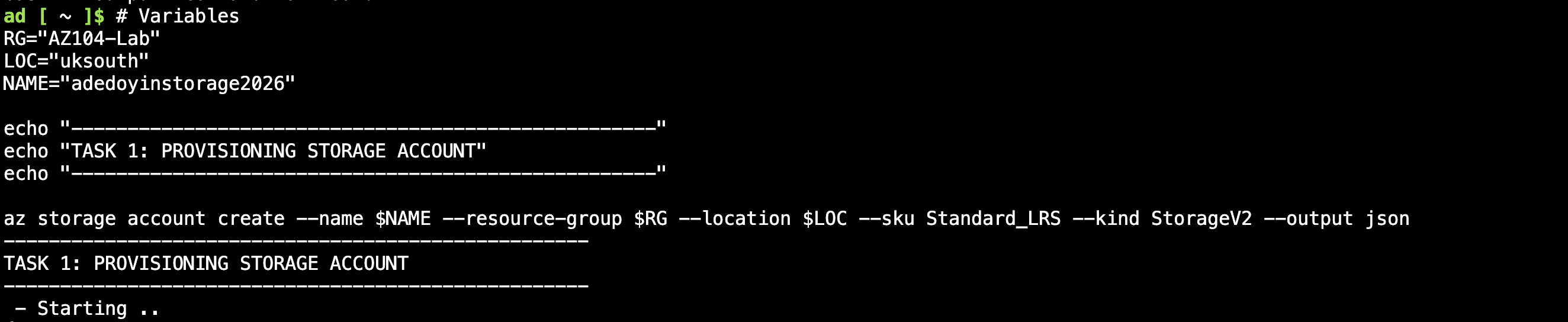
1. Secure Storage Deployment
Storage infrastructure was deployed using Azure CLI to ensure repeatability and consistent configuration.
- Region: UK South (data residency)
- Replication: Locally Redundant Storage (LRS)
- Architecture: General Purpose v2 for lifecycle and policy support
2. Identity-Based Access Control
Instead of using storage account keys, access is enforced via Microsoft Entra ID authentication.
Key Decisions
- Disabled reliance on shared keys
- Enforced
--auth-mode loginfor CLI operations - Restricted access through RBAC roles
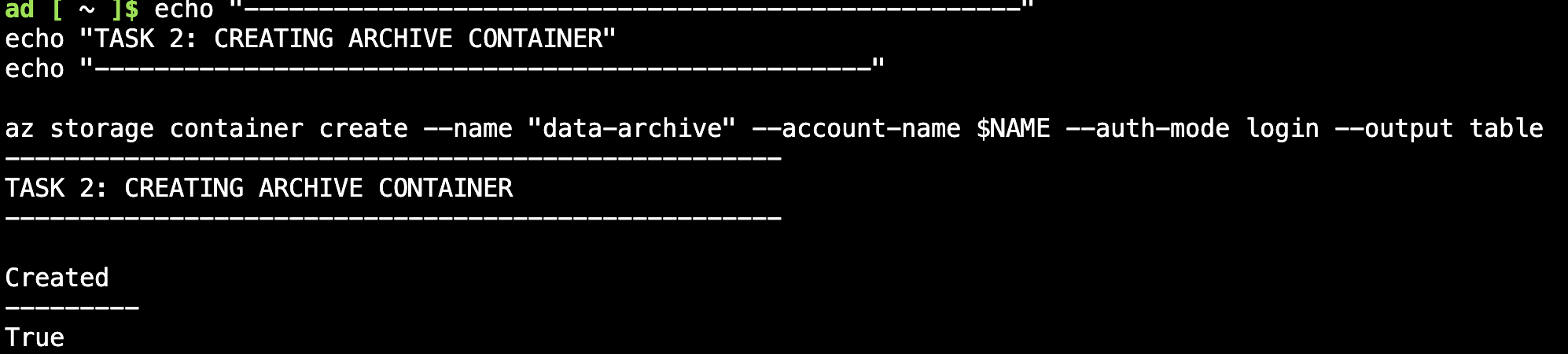
Ensures access is identity-driven and aligned to Zero Trust principles.
3. Data Protection (Immutability)
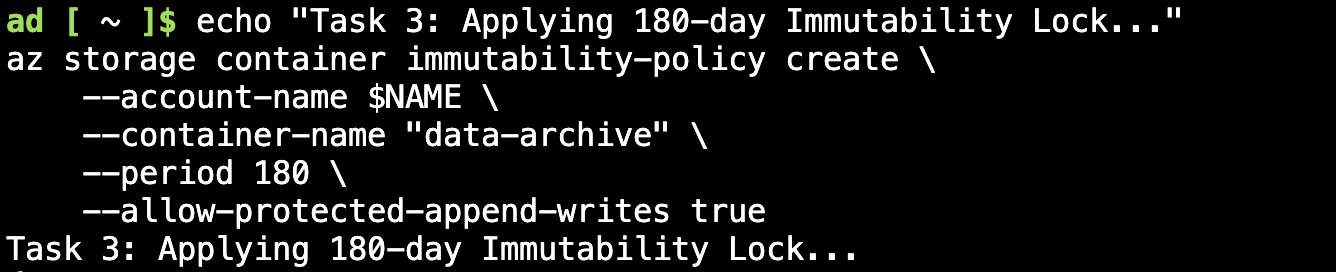
A time-based retention policy (180 days) was applied to enforce Write Once, Read Many (WORM) behaviour.
Security Impact
- Prevents deletion or modification of stored data
- Protects against ransomware and insider threats
- Ensures compliance with regulatory retention requirements
4. Lifecycle Governance
A JSON-defined lifecycle policy was implemented to automate data ageing:
- Move to Cool Tier after 30 days
- Move to Archive Tier after 90 days
- Delete after 7 years (regulatory retention)
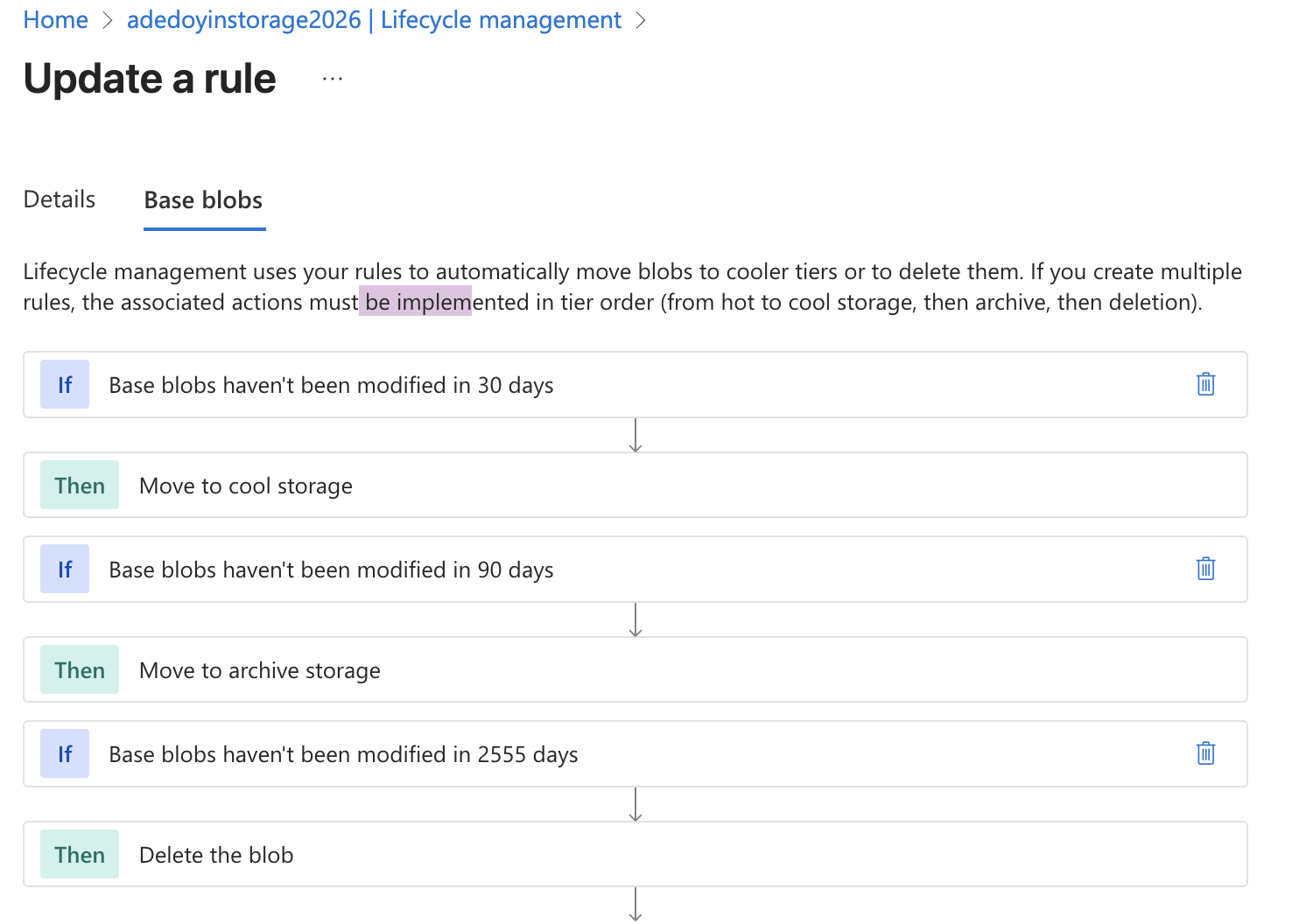
Reduces operational overhead while enforcing consistent retention policies.
5. Secure Compute Integration (ACI)
A containerised workload was deployed using Azure Container Instances.
Security Considerations
- Ephemeral compute reduces persistent attack surface
- No direct infrastructure management required
- Access to resources controlled via identity and configuration
⚖️ Design Considerations & Trade-offs
- Immutability improves security but limits operational flexibility
- Identity-based access is more secure but requires role management discipline
- Lifecycle policies reduce cost but require careful retention planning
- ACI simplifies deployment but reduces infrastructure-level control
🎯 Outcome
This project demonstrates how secure storage design integrates:
- Identity-based access control
- Data protection through immutability
- Automated governance and lifecycle management
- Controlled compute interaction with data
Resulting in a secure, compliant, and scalable data architecture.
🧠 Key Outcomes
- Secure Data Access: Eliminated shared keys in favour of identity-based control
- Data Integrity: Protected critical data using WORM policies
- Governance Automation: Enforced retention and cost optimisation through policy
- Operational Efficiency: Reduced manual management through automation
🔮 Future Enhancements
- Integration with Private Endpoints for network-level isolation
- Implementation of Managed Identities for ACI access to storage
- Advanced monitoring and alerting for data access patterns
Maintained by Jacob Adedoyin