🖥️ Project 02: Secure Compute & Network Access Control




🎯 Objective
Design and deploy a secure compute and networking environment that enforces controlled access, reduces attack surface, and aligns infrastructure with identity and access management (IAM) principles.
This project focuses on implementing network-level controls that complement identity-based access (RBAC), forming a layered security model aligned to Zero Trust and least privilege.
🧠 Design Rationale
The environment is designed to ensure that access is explicitly controlled at both the identity and network layers.
- Network Segmentation: Limits lateral movement between workloads
- Controlled Access Paths: Restricts inbound access to authorised administrative endpoints only
- Defence in Depth: Combines NSG rules with identity-based access controls
- Scalability: Structured address space supports future growth without redesign
This reflects a move from open infrastructure access to restricted, identity-aware access control models.
🔐 IAM & Security Alignment
This implementation supports core IAM principles:
- Least Privilege: Only authorised IPs can access administrative services
- Access Control Layers: Combines RBAC with network-level restrictions
- Attack Surface Reduction: Removes unnecessary exposure to public internet
- Controlled Administrative Access: Limits who can connect, how, and from where
🛠️ Technical Stack
| Category | Tools Used | Security Relevance |
|---|---|---|
| Compute | Azure Virtual Machines (Ubuntu 22.04) | Secure workload hosting |
| Networking | Virtual Network, Subnets | Segmentation and isolation |
| Security | Network Security Groups (NSGs) | Traffic filtering and access restriction |
| Availability | Availability Zones | Resilience and fault tolerance |
| Region | North Europe | Compliance and regional alignment |
📌 Implementation
1. Network Segmentation
A structured virtual network was designed to isolate workloads and reduce the risk of lateral movement.
Architecture Decisions
- Address Space:
10.0.0.0/16for scalability - Subnet Separation: Logical segmentation of workloads
- Regional Placement: North Europe selected for compliance and latency
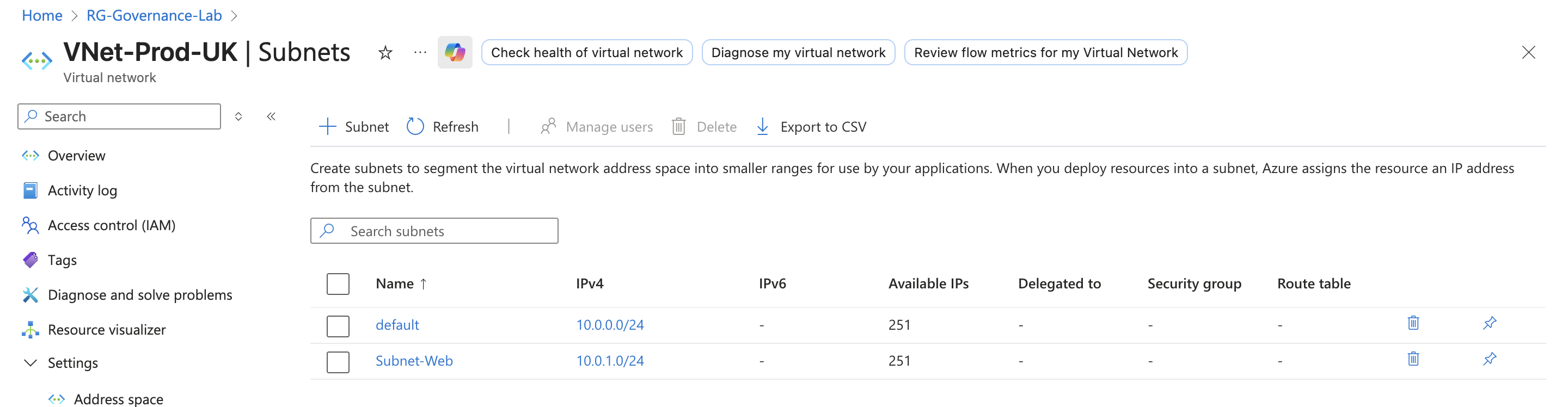
Network segmentation reduces the blast radius of potential compromise.
2. Secure Compute Deployment
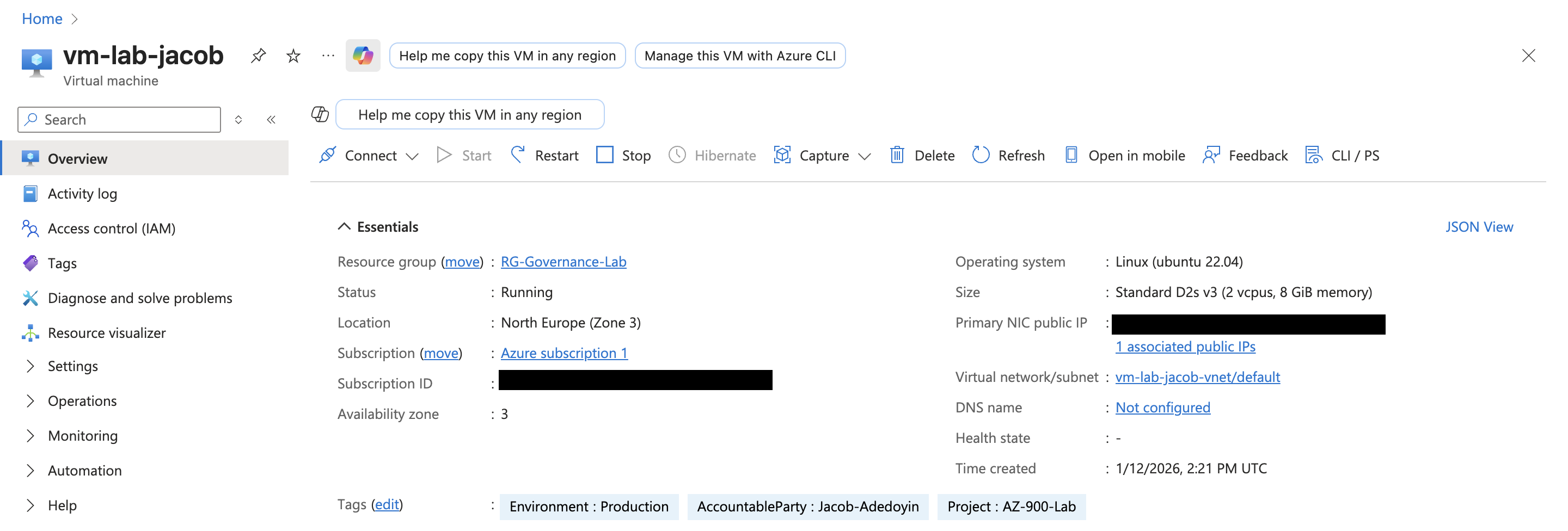
A Linux VM was deployed within the segmented network, with availability configured to ensure resilience.
Key Configuration
- VM Size: Standard D2s v3
- Availability Zone: Zone 3 (fault isolation)
- Tagging: Applied for ownership and cost tracking
3. Network Security Hardening
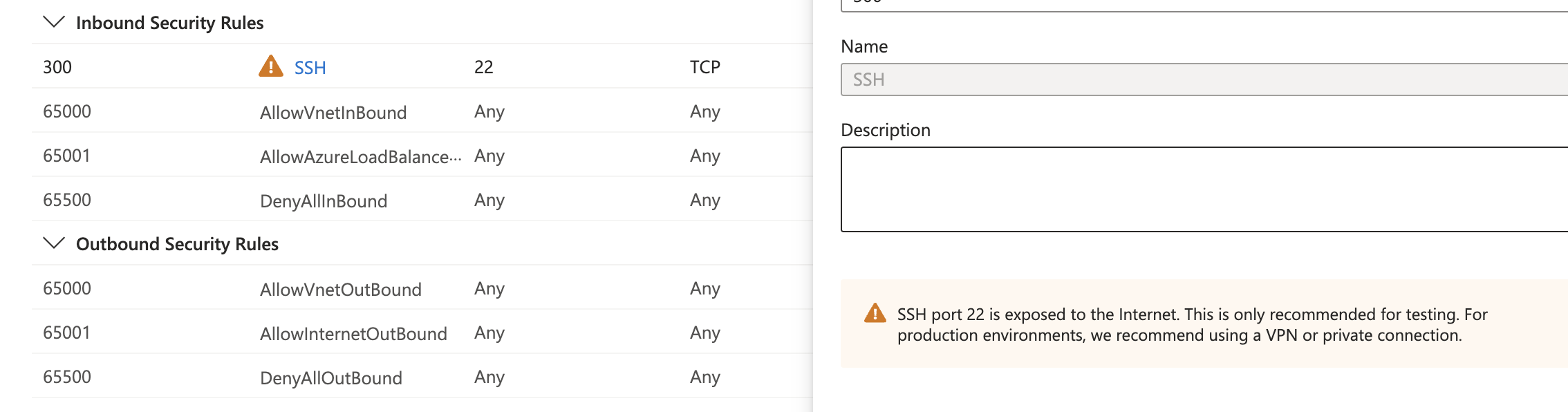
Initial configuration exposed a critical risk:
- SSH (Port 22) open to Any source
This represents a common misconfiguration that increases exposure to automated attacks.
4. Access Control Enforcement
The risk was mitigated by implementing IP-based access restrictions:
- SSH access restricted to a single trusted administrative IP
- All other inbound traffic blocked by default rules
IAM Relevance
- Enforces least privilege at network level
- Prevents misuse even if credentials are compromised
- Adds a control layer beyond identity permissions
⚖️ Design Considerations & Trade-offs
- Restricting SSH access improves security but reduces operational flexibility
- IP-based access control is effective but requires management of trusted endpoints
- Network controls must complement identity controls, not replace them
🎯 Outcome
This project demonstrates how network and compute design support IAM principles, introducing:
- Controlled administrative access
- Reduced attack surface
- Layered security beyond RBAC
- Scalable and secure infrastructure design